
Basics & Fundamentals
Latest
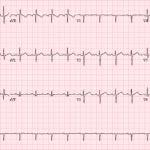
ECG Hallucinations: When S1Q3T3 Misleads
A 51-year-old truck driver presents to the ED after a brief syncopal episode at a rest stop. It is the middle of summer, his truck’s air conditioning is not working,…
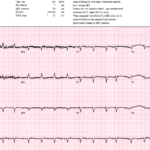
The Rhythm Behind the Irregularity
A 69-year-old woman presenting with sepsis gets the following ECG for tachycardia while febrile and shivering. The baseline is poor, atrial activity is difficult to identify, and the computer interpretation…
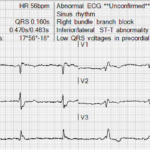
A Closer Look at the J Point
A 72-year-old man undergoes a prehospital 12-lead ECG. The tracing appears to show ST segment elevation in leads III, aVF, and aVR, raising concern for an inferior STEMI or high-risk…
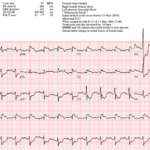
A Post-Arrest ECG With a Dangerous New Bundle Branch Block
A 72-year-old man is brought to the ED after a witnessed out-of-hospital cardiac arrest. Bystander CPR is started quickly, EMS finds a non-shockable rhythm, and ROSC is achieved after one…
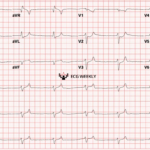
The Cath Lab Was Activated, But Something Didn’t Fit
A 70-year-old woman with CHF, COPD, intermittent atrial fibrillation, chronic pain medication use, and recent poor intake develops sudden dyspnea at rest and is found somnolent and bradycardic in the…
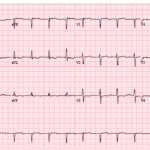
UMEM Cases, Part 3: When the Diagnosis Seems Clear and When It Is Not
A 71-year-old man presents with shortness of breath, and his ECG is initially read as a junctional rhythm. On later review, it is even mistaken for atrial fibrillation. But the…
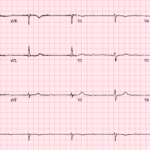
UMEM Cases, Part 2: When the ECG Conceals and When It Reveals
An 81-year-old woman presents with lightheadedness and marked bradycardia. Her ECG shows more P waves than QRS complexes, but the mechanism is not immediately clear. The key question is whether…
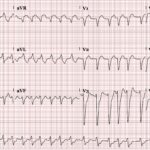
Three ECG Traps You Cannot Afford to Miss
A 60-year-old woman presents with palpitations and an irregular wide-complex tachycardia. The computer calls atrial fibrillation with a left bundle branch block, but a subtle clue in the precordial leads…
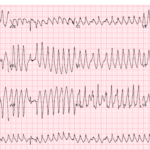
Preexcitation Pitfalls (Part 3): Wide, Irregular, Fast…Avoid AV Nodal Blockers
A 53-year-old man presents with palpitations and lightheadedness. The following ECG is obtained on arrival and appears very rapid and irregular with changing QRS morphologies. He starts showing signs of…
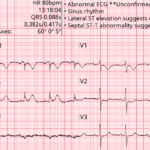
Baltimore City EMS ECGs: Pitfalls and Mimics (Part 1)
A 68-year-old man is brought to the emergency department by EMS with acute chest discomfort. The following prehospital ECG was obtained and shows concave ST elevation across multiple leads. The…
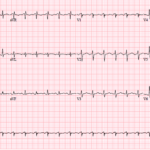
Three More ECG Pitfalls That Punish Anchoring Bias
A 51-year-old man with lung cancer presents with shortness of breath and tachycardia. The arrival ECG shows an S1Q3 pattern and seems to support a familiar diagnosis that would normally…
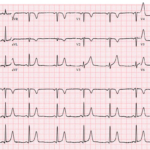
Four ECG Pitfalls That Punish Anchoring Bias
A 43-year-old woman with sharp left-sided chest pain and minimal cardiac risk factors has an initial ECG that is not diagnostic for STEMI. She looks stable, but one feature on…
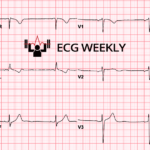
Reciprocal Depression in aVL: The Case for Serial ECGs
A 62-year-old man presents to the emergency department with acute chest pain associated with diaphoresis. He has cardiac risk factors including tobacco use. An initial 12-lead ECG is obtained on…
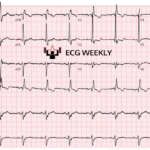
In the Era of High-Sensitivity Troponin, Does Unstable Angina Still Exist?
A 92-year-old man presents to the emergency department with gradually worsening dyspnea on exertion that has progressed to exertional chest “fullness”. He is asymptomatic on arrival with normal vitals. The…
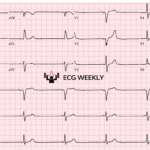
Recent ECG Case Highlights from the University of Maryland (Part II)
A 67-year-old man arrives at the emergency department complaining of lightheadedness. The following ECG is obtained and shows a slow, regular rhythm around 40 beats per minute. The P waves…
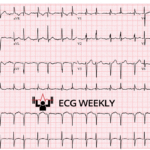
AFib Overdiagnosis: Dangerous Pitfalls and Safer Reads
A patient presents to the emergency department with new-onset palpitations. He is hemodynamically stable but noted to have an irregular rhythm on arrival. The following ECG is obtained and automatically…
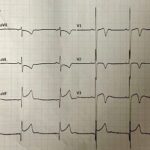
Not Your Usual STEMI: High Voltage and Narrow Q Waves
A 16-year-old male is referred to the emergency department from a primary care clinic with concern for STEMI. He has no known past medical history. At the clinic, he reported…
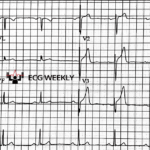
STEMI Diagnosis: Beyond the Millimeters
A 55-year-old man with PMHx of hyperlipidemia presents to the emergency department with vague chest discomfort. The following ECG is obtained:
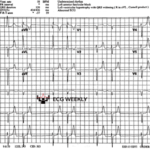
Regularly Irregular Rhythms: Sorting Mobitz from PACs and Other Causes
A 52-year-old woman presents to the emergency department with weakness. The following ECG is obtained:
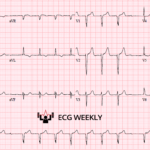
Grouped Beats: A Subtle AV Block Pitfall
An elderly patient is brought to the emergency department with acute stroke symptoms and the following routine 12-lead ECG is obtained during the patient’s stroke evaluation:
Free Content
Jump on our email list for free tips and insights delivered to your inbox monthly. No spam - just quick pearls and ECG education.
Categories
- No categories

© 2026 ECG Weekly. All rights reserved. | Terms of Use | Privacy Policy
Powered by the member(dev) platform
 Loading...