
STEMI Equivalent
Results:

Traditional STEMI Criteria
Key Points: STAT ECG Is the First Decision Point in Suspected ACS: The immediate purpose of the initial ECG is to identify acute coronary ischemia, particularly STEMI or another pattern…
Occlusion MI: STEMI & Beyond Hub
Key Points: The ECG’s Primary Role in ACS Is Detecting Acute Coronary Occlusion: Acute coronary occlusion is a time-critical diagnosis in which rapid recognition and reperfusion can preserve myocardium and…
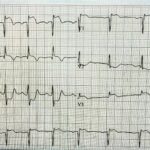
Three High Risk ECGs and the Right Next Move
A 34 year old man presents with acute chest pain radiating to the left arm associated with diaphoresis. He has hyperlipidemia and a family history of early coronary disease. The…
Barcelona Criteria in Left Bundle Branch Block (LBBB): OMI Pattern
Key Points: The Barcelona Criteria are ECG criteria proposed to identify acute myocardial infarction in patients with LBBB. Core problem: LBBB causes expected secondary ST-T changes, so standard STEMI millimeter…
Occlusion MI in Left Bundle Branch Block (LBBB): STEMI Equivalent Pattern
Key Points: LBBB does not exclude acute coronary occlusion. LBBBs produce abnormal depolarization and expected secondary ST-T changes, which can mask or mimic ischemia. Acute occlusion MI can still be…
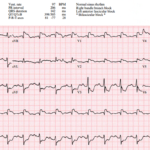
Post-Arrest STEMI: Cath Lab or Caution?
A 72-year-old man is brought to the ED after witnessed cardiac arrest. Bystander CPR was started quickly, EMS found a nonshockable rhythm, epinephrine was given, and ROSC was achieved. Forty…
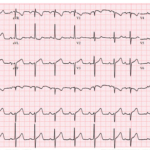
UMEM Cases, Part 1: When the ECG Lies and When It Evolves
A 72-year-old man presents with chest pain and shortness of breath. His ECG shows sinus rhythm with LVH, mild inferior ST elevation, and lateral ST-T abnormalities that some interpret as…
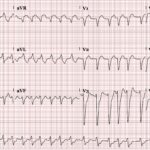
Three ECG Traps You Cannot Afford to Miss
A 60-year-old woman presents with palpitations and an irregular wide-complex tachycardia. The computer calls atrial fibrillation with a left bundle branch block, but a subtle clue in the precordial leads…
Occlusion MI in Ventricular Paced Rhythms: STEMI Equivalent Pattern
Key Points: Ventricular paced rhythms can mask acute coronary occlusion. Pacing alters depolarization and produces expected secondary ST-T abnormalities, so standard STEMI criteria are unreliable. Appropriate discordance is expected in…
Modified Sgarbossa Criteria: STEMI Equivalent Pattern
Key Points: LBBB and ventricular-paced rhythms can hide acute coronary occlusion because abnormal depolarization creates expected secondary ST-T changes. Occlusion MI can still be recognized when those ST changes are…
STEMI in the Presence of Baseline ECG Abnormalities
Key Points: Baseline ECG abnormalities do not protect patients from occlusion MI. They increase miss rates because they distort the ST segment and T waves. The core question is not…
Lateral and High-Lateral STEMI: Criteria, Localization, and Pitfalls
Key Points: Lateral and high-lateral STEMI often present with subtle ST elevation and are commonly missed or labeled as nonspecific ST-T changes. Small-appearing ECG changes may represent true coronary occlusion…
Inferior STEMI: Criteria, RV Involvement, and Pitfalls
Key Points: Inferior STEMI is the most common STEMI subtype and is frequently complicated by right ventricular and posterior involvement. Inferior occlusion may present with classic ST elevation, subtle ischemic…
Anterior STEMI: Criteria, Localization, and Pitfalls
Key Points: Anterior STEMI represents large myocardial territory at risk and carries the highest mortality among STEMI subtypes. Early recognition and reperfusion are critical. LAD occlusion may present with classic…
de Winter T Waves: STEMI Equivalent Pattern
Key Points: STEMI Equivalent: The de Winter ECG pattern is an uncommon STEMI equivalent indicative of an unstable proximal occlusion of the LAD (left anterior descending coronary artery). Treat the…

Is This a STEMI or STEMI Equivalent Pattern?
A 51-year-old man presents to the emergency department with acute chest pain that has progressively worsened over the past 3 hours. Pain radiates to the jaw and is associated with…

Concerning chest pain with ST segment depression in the anteroseptal leads (Part 2/2)
A 50-year-old woman presents to the emergency department with acute chest pain. The following ECG is obtained on arrival:

Concerning chest pain with ST segment depression in the anteroseptal leads (Part 1/2)
A 72-year-old woman with a past medical history of diabetes, coronary artery disease, and heart failure presents to the emergency department with acute onset chest and back pain. Pain is…

STAT ECG Diagnoses: must know ECG patterns in screening for acute coronary occlusion
A 58-year-old woman is brought into the emergency department by paramedics with chest pain and diaphoresis. The following EMS ECG was obtained:

ECG Basics & Fundamentals: when to get posterior leads
A 70-year-old man presents to the ED with ischemic chest pain. The following ECG is obtained:
ECG Tags
- 5th Universal Definition of MI
- A-Z
- ACS Mimics
- ACS-OMI
- Activation
- Acute MI
- Advanced Level Curriculum
- Annual ECG Competition
- Anterior OMI
- Anterior STEMI
- Approach
- Arrest
- Arrhythmia
- Arrhythmogenic Cardiomyopathy
- Artifact
- ARVC
- ARVD
- Atrial Parasystole
- Attending
- AV Block
- aVF
- aVL
- aVR
- Axis
- Barcelona
- Basics
- Bix Rule
- Board Review
- Bradyarrhythmia
- Cath Lab
- Chest Pain
- Clumped Beats
- Competition
- Conduction
- Core
- Core Level Curriculum
- Critical ECG Patterns
- Curriculum
- DDx
- Delta
- Devices
- Diagonal Branch Occlusion
- Differential Diagnoses
- Diffuse ST Elevation
- Documentation
- Early Repolarization
- ECG Interpretation
- ECG Localization
- ECG Variant
- Education/Teaching
- Electrolytes
- Emergencies
- Emergent Cath Lab Activation
- EMS
- Expert Level Curriculum
- Flutter
- Flutter Waves
- Foundations Level Curriculum
- Guidelines
- High-Lateral STEMI
- Hub
- Hyperacute T waves
- Hypercalcemia
- Hyperkalemia
- Hypermagnesemia
- Hypocalcemia
- Hypokalemia
- Hypomagnesemia
- Hyponatremia
- Hypothermia
- I
- II
- Index
- Inferior OMI
- Inferior STEMI
- Intervals
- Irregular
- Ischemia
- Ischemia & Infarction
- J point
- J Waves
- JT
- Junctional Rhythm
- Juvenile T wave
- LAD Occlusion
- Lateral STEMI
- LBBB
- LCx Occlusion
- Lead Placement
- Left Atrial Enlargement (LAE)
- Life Savers
- LV an
- LV Aneurysm
- LVAD
- Mastery Level Curriculum
- Metabolic
- MI
- Mimics
- Morphology
- Narrow QRS
- Occlusion MI
- OMI Pattern
- Orthodromic AVRT
- Osborn Waves
- P Wave
- Paced Rhythms
- Pacemaker/ICD
- Paramedics
- Pauses
- PE
- Pediatrics
- Pericardial
- Pericarditis
- PGY-1
- PGY-2
- PGY-3
- PGY-4
- Post-Arrest
- post-arrest STEMI
- Post-Cardiac Arrest
- Posterior Extension
- Posterior MI
- Posterior STEMI
- potpourri
- PR
- Preexcitation
- Premature Complexes
- Prolonged QT
- Pulmonary Embolism
- Pulse-Tapping Artifact
- PVCs
- Q Wave
- QRS
- QT
- R Waves
- RAD
- Rate
- RBBB
- RCA Occlusion
- Regular
- Reperfusion
- Rhythm
- Right Atrial Enlargement (RAE)
- RR
- S Waves
- S1Q3T3
- Segments
- Seizure
- Serial ECGs
- Sgarbossa
- Shock
- South African Flag Sign
- ST
- ST Depression
- ST Elevation
- STEMI
- STEMI Equivalent
- STEMI Mimics
- STEMI Negative OMI
- Stepwise
- Stroke
- Structural
- Students
- SVT
- Syncope
- T Wave Inversion
- T Waves
- Tachyarrhythmia
- Tachycardia
- Tamponade
- Terminal QRS Distortion
- Toxicology
- TP
- Traditional STEMI Criteria
- U Waves
- Unstable
- V1-V4
- V2
- V5
- V6
- Vectors
- Ventricular Repolarization
- Ventricular Rhythms
- Ventricular Tachycardia
- Voltage
- Waveforms
- Wide QRS
- Workflow
- WPW
© 2026 ECG Weekly. All rights reserved. | Terms of Use | Privacy Policy
Powered by the member(dev) platform
 Loading...