
Hyperkalemia
Results:

Ventricular Tachycardia (VT) Mimics
Key Points: Default assumption: A regular wide-complex tachycardia should be considered VT until another diagnosis is more likely. Rate modifies the differential, not the diagnosis. Typical monomorphic VT is often…
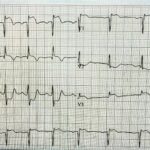
Three High Risk ECGs and the Right Next Move
A 34 year old man presents with acute chest pain radiating to the left arm associated with diaphoresis. He has hyperlipidemia and a family history of early coronary disease. The…
Hyperkalemic Periodic Paralysis (Impressive Syndrome)
Key Points: What It Is: Severe hyperkalemia can cause sudden, profound, symmetric muscle weakness or flaccid paralysis. Dr. Mattu has referred to this memorable presentation as “Impressive Syndrome,” a teaching…
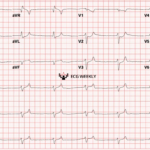
The Cath Lab Was Activated, But Something Didn’t Fit
A 70-year-old woman with CHF, COPD, intermittent atrial fibrillation, chronic pain medication use, and recent poor intake develops sudden dyspnea at rest and is found somnolent and bradycardic in the…
Hyperkalemia
Key Points: ECG as a Frontline Diagnostic Tool: Hyperkalemia often reveals itself on the ECG before lab confirmation. Early recognition of characteristic changes can be life-saving, especially in critically ill…
Hyperkalemia Emergencies
Key Points: Severe Hyperkalemia Mimics Several Life-Threatening Conditions: Severe hyperkalemia is one of the most dangerous ECG mimics in emergency medicine. It can resemble unstable bradyarrhythmias, VT, STEMI, and pacemaker…
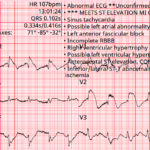
Baltimore City EMS ECGs: Pitfalls and Mimics (Part 2)
A 54-year-old man presents to the emergency department by EMS with acute shortness of breath. A prehospital ECG triggers a STEMI alert based on the computer interpretation. The tracing shows…
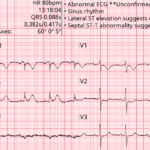
Baltimore City EMS ECGs: Pitfalls and Mimics (Part 1)
A 68-year-old man is brought to the emergency department by EMS with acute chest discomfort. The following prehospital ECG was obtained and shows concave ST elevation across multiple leads. The…
STEMI vs Severe Hyperkalemia: DDx
Key Points: Severe hyperkalemia is a true ECG chameleon. It can produce ST elevation, wide QRS complexes, axis shifts, and conduction blocks that closely mimic STEMI or ventricular tachycardia. New…
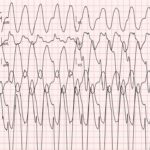
The Post-Arrest Wide Complex Rhythm That Was Not VT
A 35-year-old woman arrives at the emergency department after a witnessed seizure and brief cardiac arrest with ROSC. Her arrival ECG shows a very wide complex rhythm that the machine…
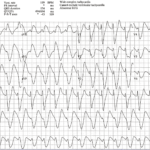
The Post-Thanksgiving Rhythm You Cannot Miss
A 48-year-old woman presents two days after Thanksgiving with severe weakness, palpitations, and mild chest discomfort. Her ECG appears to show a very wide complex regular tachycardia at 119 bpm.
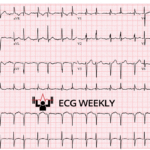
AFib Overdiagnosis: Dangerous Pitfalls and Safer Reads
A patient presents to the emergency department with new-onset palpitations. He is hemodynamically stable but noted to have an irregular rhythm on arrival. The following ECG is obtained and automatically…
BRASH Syndrome
Key Points BRASH is a synergistic spiral: bradycardia, renal failure, therapeutic AV-nodal blockade, shock, and hyperkalemia. The signature clue is disproportionate brady-shock despite only modest potassium elevation. Do not be…
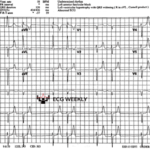
Regularly Irregular Rhythms: Sorting Mobitz from PACs and Other Causes
A 52-year-old woman presents to the emergency department with weakness. The following ECG is obtained:
Recent University of Maryland Medical Center Cases (Part V)
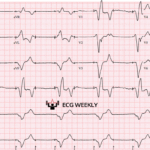
A 67-year-old man presents with profound generalized weakness and inability to move his extremities or get out of bed. He has a history of hypertension, chronic kidney disease, substance use…
Unrecognized Killers in Emergency Electrocardiography
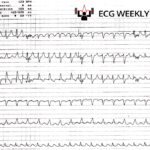
A 42-year-old man presents with fever, cough, shortness of breath, and vomiting. He appears toxic and dehydrated on arrival with suspected severe sepsis from multilobar pneumonia. He is later intubated…
2025 EMS Cases Part II
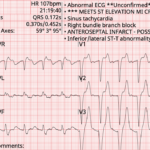
A 57-year-old man is being brought in by EMS for generalized weakness and vomiting. The following ECG is obtained and transmitted as a CODE STEMI alert:

A Decade of ECG Gems: Counting Down the Top 10 Cases
A 68-year-old man with PMHx of hypertension and tobacco use arrives at the emergency department with severe central chest pain and mild shortness of breath over the past 1-2 hours….

2024 UMMC Cases (Part II)
A 55-year-old woman arrives at the emergency department with shortness of breath and is noted to be tachypneic. The following ECG is obtained:

What’s Behind These Strange T Waves?
A 52-year-old woman presents to the emergency department with severe malaise and the following ECG is obtained:
ECG Tags
- 5th Universal Definition of MI
- A-Z
- ACS Mimics
- ACS-OMI
- Activation
- Acute MI
- Advanced Level Curriculum
- Annual ECG Competition
- Anterior OMI
- Anterior STEMI
- Approach
- Arrest
- Arrhythmia
- Arrhythmogenic Cardiomyopathy
- Artifact
- ARVC
- ARVD
- Atrial Parasystole
- Attending
- AV Block
- aVF
- aVL
- aVR
- Axis
- Barcelona
- Basics
- Bix Rule
- Board Review
- Bradyarrhythmia
- Cath Lab
- Chest Pain
- Clumped Beats
- Competition
- Conduction
- Core
- Core Level Curriculum
- Critical ECG Patterns
- Curriculum
- DDx
- Delta
- Devices
- Diagonal Branch Occlusion
- Differential Diagnoses
- Diffuse ST Elevation
- Documentation
- Early Repolarization
- ECG Interpretation
- ECG Localization
- ECG Variant
- Education/Teaching
- Electrolytes
- Emergencies
- Emergent Cath Lab Activation
- EMS
- Expert Level Curriculum
- Flutter
- Flutter Waves
- Foundations Level Curriculum
- Guidelines
- High-Lateral STEMI
- Hub
- Hyperacute T waves
- Hypercalcemia
- Hyperkalemia
- Hypermagnesemia
- Hypocalcemia
- Hypokalemia
- Hypomagnesemia
- Hyponatremia
- Hypothermia
- I
- II
- Index
- Inferior OMI
- Inferior STEMI
- Intervals
- Irregular
- Ischemia
- Ischemia & Infarction
- J point
- J Waves
- JT
- Junctional Rhythm
- Juvenile T wave
- LAD Occlusion
- Lateral STEMI
- LBBB
- LCx Occlusion
- Lead Placement
- Left Atrial Enlargement (LAE)
- Life Savers
- LV an
- LV Aneurysm
- LVAD
- Mastery Level Curriculum
- Metabolic
- MI
- Mimics
- Morphology
- Narrow QRS
- Occlusion MI
- OMI Pattern
- Orthodromic AVRT
- Osborn Waves
- P Wave
- Paced Rhythms
- Pacemaker/ICD
- Paramedics
- Pauses
- PE
- Pediatrics
- Pericardial
- Pericarditis
- PGY-1
- PGY-2
- PGY-3
- PGY-4
- Post-Arrest
- post-arrest STEMI
- Post-Cardiac Arrest
- Posterior Extension
- Posterior MI
- Posterior STEMI
- potpourri
- PR
- Preexcitation
- Premature Complexes
- Prolonged QT
- Pulmonary Embolism
- Pulse-Tapping Artifact
- PVCs
- Q Wave
- QRS
- QT
- R Waves
- RAD
- Rate
- RBBB
- RCA Occlusion
- Regular
- Reperfusion
- Rhythm
- Right Atrial Enlargement (RAE)
- RR
- S Waves
- S1Q3T3
- Segments
- Seizure
- Serial ECGs
- Sgarbossa
- Shock
- South African Flag Sign
- ST
- ST Depression
- ST Elevation
- STEMI
- STEMI Equivalent
- STEMI Mimics
- STEMI Negative OMI
- Stepwise
- Stroke
- Structural
- Students
- SVT
- Syncope
- T Wave Inversion
- T Waves
- Tachyarrhythmia
- Tachycardia
- Tamponade
- Terminal QRS Distortion
- Toxicology
- TP
- Traditional STEMI Criteria
- U Waves
- Unstable
- V1-V4
- V2
- V5
- V6
- Vectors
- Ventricular Repolarization
- Ventricular Rhythms
- Ventricular Tachycardia
- Voltage
- Waveforms
- Wide QRS
- Workflow
- WPW
© 2026 ECG Weekly. All rights reserved. | Terms of Use | Privacy Policy
Powered by the member(dev) platform
 Loading...