
ACS-OMI
Results:

Acute Coronary Syndromes (ACS)
Key Points: ACS Is a Clinical Syndrome: Acute coronary syndrome (ACS) includes unstable angina (UA) and acute myocardial infarction (MI) caused by a primary acute coronary pathology. Diagnosis integrates symptoms…
Traditional STEMI Criteria
Key Points: STAT ECG Is the First Decision Point in Suspected ACS: The immediate purpose of the initial ECG is to identify acute coronary ischemia, particularly STEMI or another pattern…
Occlusion MI: STEMI & Beyond Hub
Key Points: The ECG’s Primary Role in ACS Is Detecting Acute Coronary Occlusion: Acute coronary occlusion is a time-critical diagnosis in which rapid recognition and reperfusion can preserve myocardium and…
EMS ECGs in Acute Coronary Syndromes (ACS)
Key Points: Get the ECG Early: Obtain and interpret a high-quality 12-lead ECG within 10 minutes of first medical contact (FMC) in patients with suspected ACS. Early prehospital ECG acquisition…
Diffuse ST Elevation: DDx
Key Points: ST segment elevation (STE) is an ECG finding, not a diagnosis. Multiple ischemic and non-ischemic conditions can produce diffuse STE. Diffuse STE is more commonly non-ischemic than ischemic,…
ST Depression: DDx
Key Points: ST depression is a pattern, not a diagnosis. It can represent ischemia, reciprocal change, baseline repolarization abnormalities, or noncardiac physiology. First considerations: regional (territorial) ST depression vs diffuse…
ST Depression V1-V4: OMI Pattern
Key Points: Posterior OMI can hide on the standard 12-lead. Acute posterior coronary occlusion may produce no diagnostic ST elevation in the conventional leads. Instead, posterior ST elevation is seen…
ST Depression in V1-V4: DDx
Key Points: Do not reflexively label ST depression in V1–V4 as “anterior ischemia/NSTEMI.” In ACS symptoms, posterior OMI is a major concern when the depression is most prominent in V1–V3…
STEMI vs Early Repolarization: DDx
Key Points: Early repolarization (ER) is one of the most common non-ischemic causes of ST elevation and one of the most frequent ECG mimics of acute anterior coronary occlusion. The…
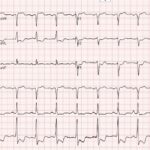
Four ECGs Hiding a High-Risk Coronary Pattern
A 56-year-old man presents with 1 week of concerning chest pain and shortness of breath. His ECG does not meet conventional STEMI criteria, but it shows subtle ST-segment abnormalities in…
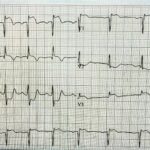
Three High Risk ECGs and the Right Next Move
A 34 year old man presents with acute chest pain radiating to the left arm associated with diaphoresis. He has hyperlipidemia and a family history of early coronary disease. The…
Barcelona Criteria in Left Bundle Branch Block (LBBB): OMI Pattern
Key Points: The Barcelona Criteria are ECG criteria proposed to identify acute myocardial infarction in patients with LBBB. Core problem: LBBB causes expected secondary ST-T changes, so standard STEMI millimeter…
Aslanger Pattern: OMI Pattern
Key Points: Aslanger pattern is an OMI pattern that can identify acute inferior occlusion despite not meeting traditional STEMI criteria. The key finding is ST segment elevation isolated to lead…
Occlusion MI in Left Bundle Branch Block (LBBB): STEMI Equivalent Pattern
Key Points: LBBB does not exclude acute coronary occlusion. LBBBs produce abnormal depolarization and expected secondary ST-T changes, which can mask or mimic ischemia. Acute occlusion MI can still be…
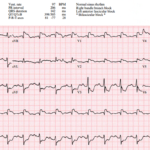
Post-Arrest STEMI: Cath Lab or Caution?
A 72-year-old man is brought to the ED after witnessed cardiac arrest. Bystander CPR was started quickly, EMS found a nonshockable rhythm, epinephrine was given, and ROSC was achieved. Forty…
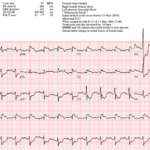
A Post-Arrest ECG With a Dangerous New Bundle Branch Block
A 72-year-old man is brought to the ED after a witnessed out-of-hospital cardiac arrest. Bystander CPR is started quickly, EMS finds a non-shockable rhythm, and ROSC is achieved after one…
New RBBB + LAFB (Bifascicular Block) in ACS: OMI Pattern
Key Points: In a patient with ischemic symptoms, new RBBB + LAFB should raise concern for proximal LAD or septal ischemia until proven otherwise, especially if the patient has ongoing…
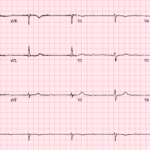
UMEM Cases, Part 2: When the ECG Conceals and When It Reveals
An 81-year-old woman presents with lightheadedness and marked bradycardia. Her ECG shows more P waves than QRS complexes, but the mechanism is not immediately clear. The key question is whether…
ST Elevation in aVR with Diffuse ST Segment Depression: OMI Pattern
Key Points: Pattern, not a STEMI equivalent. ST elevation in aVR (≥1 mm), often with ST elevation in V1 and diffuse ST depression (≥1 mm in ≥6 leads), represents high-risk…
ST Elevation in aVR: DDx
Key Points: ST elevation (STE) in aVR with diffuse ST depression most often reflects global subendocardial ischemia, not focal transmural infarction. High-risk coronary disease is one cause, not the only…
ECG Tags
- 5th Universal Definition of MI
- A-Z
- ACS Mimics
- ACS-OMI
- Activation
- Acute MI
- Advanced Level Curriculum
- Annual ECG Competition
- Anterior OMI
- Anterior STEMI
- Approach
- Arrest
- Arrhythmia
- Arrhythmogenic Cardiomyopathy
- Artifact
- ARVC
- ARVD
- Atrial Parasystole
- Attending
- AV Block
- aVF
- aVL
- aVR
- Axis
- Barcelona
- Basics
- Bix Rule
- Board Review
- Bradyarrhythmia
- Cath Lab
- Chest Pain
- Clumped Beats
- Competition
- Conduction
- Core
- Core Level Curriculum
- Critical ECG Patterns
- Curriculum
- DDx
- Delta
- Devices
- Diagonal Branch Occlusion
- Differential Diagnoses
- Diffuse ST Elevation
- Documentation
- Early Repolarization
- ECG Interpretation
- ECG Localization
- ECG Variant
- Education/Teaching
- Electrolytes
- Emergencies
- Emergent Cath Lab Activation
- EMS
- Expert Level Curriculum
- Flutter
- Flutter Waves
- Foundations Level Curriculum
- Guidelines
- High-Lateral STEMI
- Hub
- Hyperacute T waves
- Hypercalcemia
- Hyperkalemia
- Hypermagnesemia
- Hypocalcemia
- Hypokalemia
- Hypomagnesemia
- Hyponatremia
- Hypothermia
- I
- II
- Index
- Inferior OMI
- Inferior STEMI
- Intervals
- Irregular
- Ischemia
- Ischemia & Infarction
- J point
- J Waves
- JT
- Junctional Rhythm
- Juvenile T wave
- LAD Occlusion
- Lateral STEMI
- LBBB
- LCx Occlusion
- Lead Placement
- Left Atrial Enlargement (LAE)
- Life Savers
- LV an
- LV Aneurysm
- LVAD
- Mastery Level Curriculum
- Metabolic
- MI
- Mimics
- Morphology
- Narrow QRS
- Occlusion MI
- OMI Pattern
- Orthodromic AVRT
- Osborn Waves
- P Wave
- Paced Rhythms
- Pacemaker/ICD
- Paramedics
- Pauses
- PE
- Pediatrics
- Pericardial
- Pericarditis
- PGY-1
- PGY-2
- PGY-3
- PGY-4
- Post-Arrest
- post-arrest STEMI
- Post-Cardiac Arrest
- Posterior Extension
- Posterior MI
- Posterior STEMI
- potpourri
- PR
- Preexcitation
- Premature Complexes
- Prolonged QT
- Pulmonary Embolism
- Pulse-Tapping Artifact
- PVCs
- Q Wave
- QRS
- QT
- R Waves
- RAD
- Rate
- RBBB
- RCA Occlusion
- Regular
- Reperfusion
- Rhythm
- Right Atrial Enlargement (RAE)
- RR
- S Waves
- S1Q3T3
- Segments
- Seizure
- Serial ECGs
- Sgarbossa
- Shock
- South African Flag Sign
- ST
- ST Depression
- ST Elevation
- STEMI
- STEMI Equivalent
- STEMI Mimics
- STEMI Negative OMI
- Stepwise
- Stroke
- Structural
- Students
- SVT
- Syncope
- T Wave Inversion
- T Waves
- Tachyarrhythmia
- Tachycardia
- Tamponade
- Terminal QRS Distortion
- Toxicology
- TP
- Traditional STEMI Criteria
- U Waves
- Unstable
- V1-V4
- V2
- V5
- V6
- Vectors
- Ventricular Repolarization
- Ventricular Rhythms
- Ventricular Tachycardia
- Voltage
- Waveforms
- Wide QRS
- Workflow
- WPW

© 2026 ECG Weekly. All rights reserved. | Terms of Use | Privacy Policy
Powered by the member(dev) platform
 Loading...